

Vibroacoustic science
The body is listening.
Independent university researchers use Woojer in peer‑reviewed studies. What you feel, they measure.
The evidence
The numbers behind the feeling.
1–250 Hz
The deep end of sound, turned into vibration you feel.
7 / 7
Median score from clinicians in training for Woojer’s part in a BMJ Open simulation study.
1,000+
Professionals in the Woojer Network.
Real stories
It went further than we imagined.
We built this for immersion. It turned up in focus, sensory experience, accessibility, relaxation and recovery, and in rooms nobody briefed us on.
Shared by Woojer users, in their own words. Woojer is a wellness and entertainment product, not a medical device.
Woojer in research
The hardware is already in the room.
Independent researchers are running Woojer inside measured protocols.
Peer-reviewed RCT · 2025
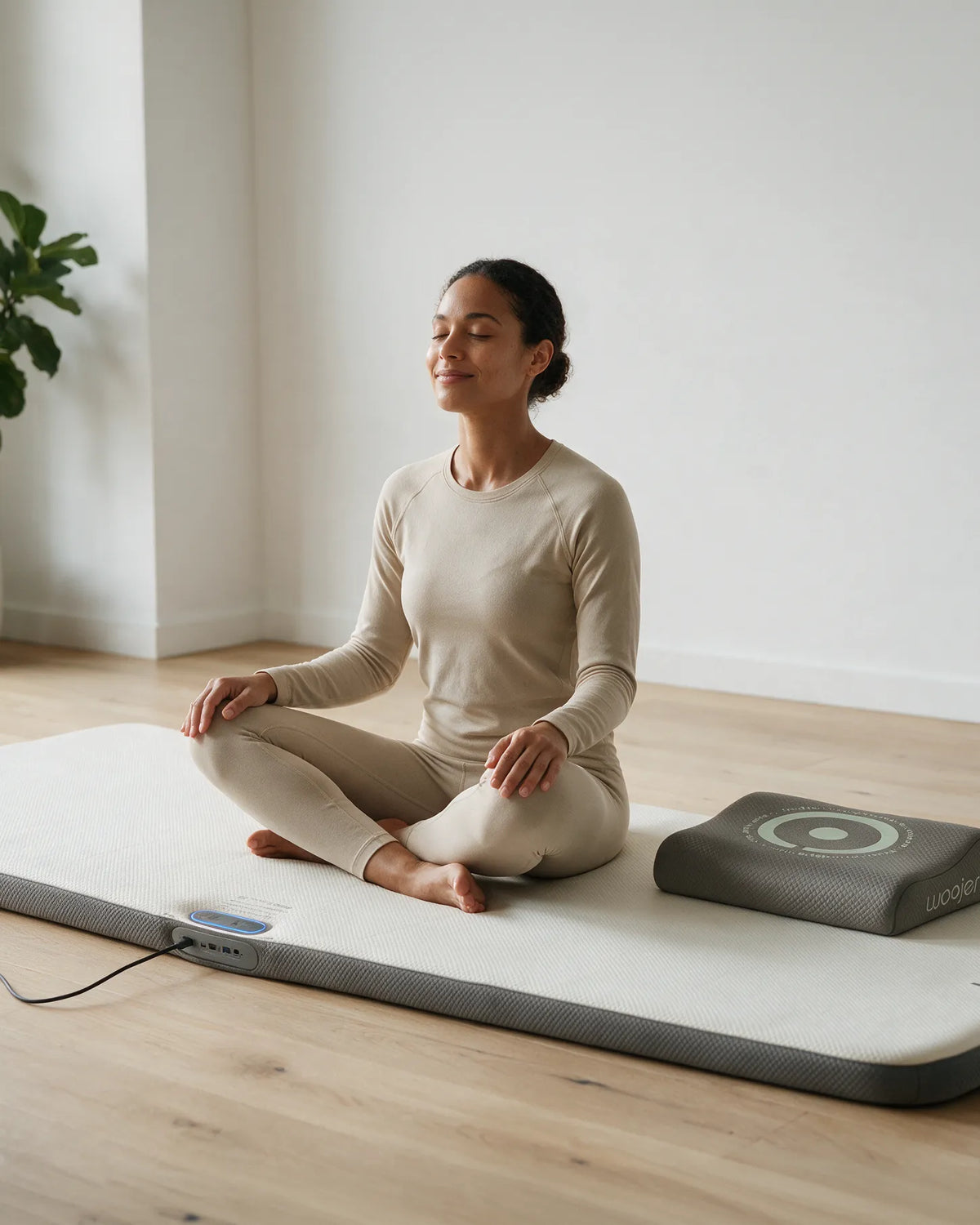
Breath pacing, felt physically.
Journal of Anxiety Disorders
Woojer in the protocol
Participants wore Woojer on the chest during intervention visits.
What was measured
Respiration variability during breath-focused mindfulness in trauma-exposed adults.
What was reported
128 people in four groups. Only the group whose vibration was synced to their breath breathed more steadily across the visits. In the other three groups, breathing became less steady.
Academic abstract · 2025
What the body notices first.
Ariel University, Temporal Organization of Behavior Lab
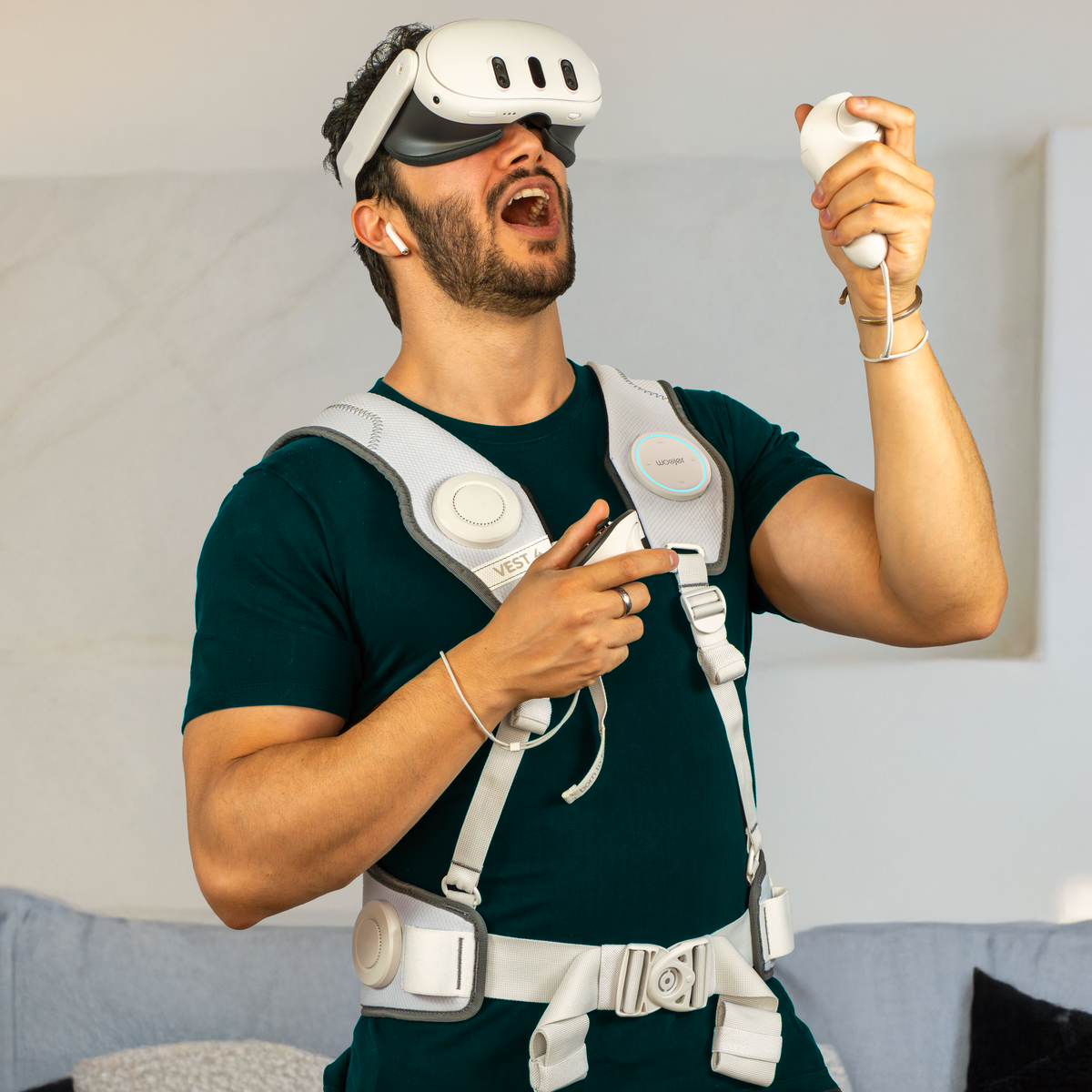
Woojer in the protocol
Mild vibro-tactile stimulation delivered through Woojer to young adults with and without ADHD.
What was measured
Electrodermal activity and subjective arousal.
What was reported
The abstract reported intensity-dependent electrodermal effects and described the vibro-tactile response as largely unconscious.
Immersive simulation · 2026
Haptics inside high-stakes training.
BMJ Open
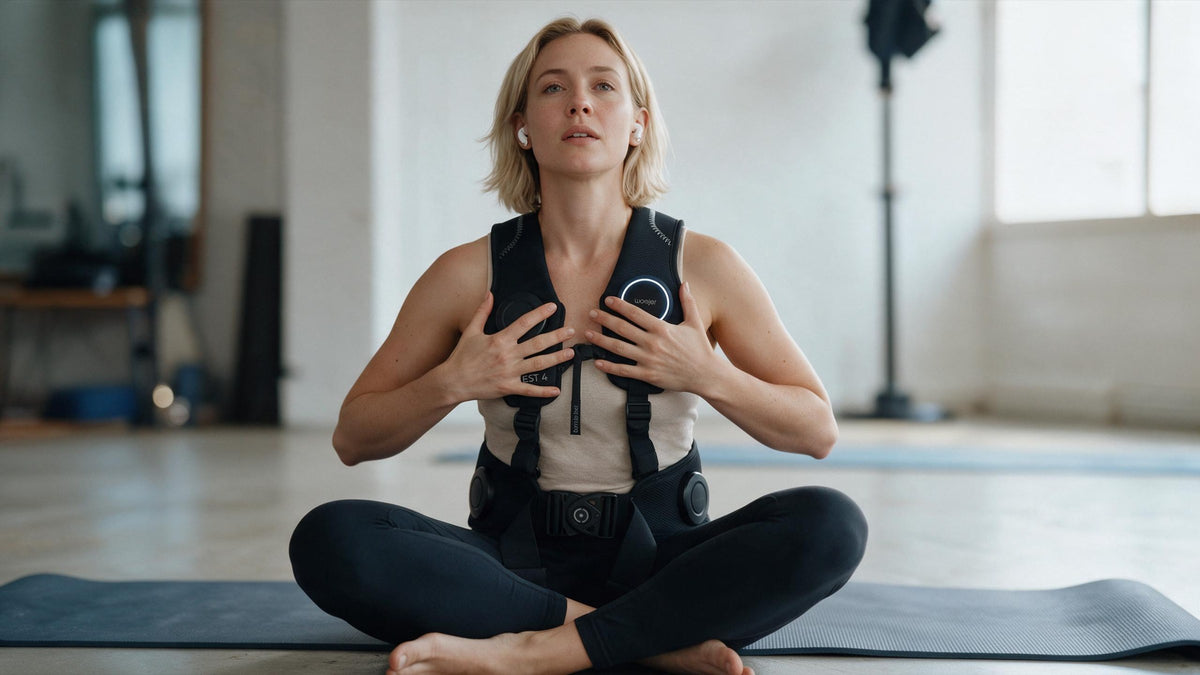
Woojer in the protocol
Woojer integrated with VR and audio in an immersive hypothermia resuscitation simulation.
What was reported
Among participants rating the Woojer contribution, the median rating was 7 out of 7, IQR 6 to 7.
Real stories · Deaf Rave, Brighton 2025
Music, made for people who feel it first.
How physical sound works
Sound you do not just hear.
Transducers turn low-frequency audio into controlled physical motion that reaches the body through contact. Everything on this page starts here.
01 Audio
A low-frequency signal
OSCI™ reproduces 1 to 250 Hz. The band the body reads as pressure rather than pitch, and the one most of this research uses, sits inside it.
02 Motion
OSCI™ converts it
A precision transducer turns the signal into mechanical movement, tightly synced to the sound.
03 Body
Contact carries it
Through contact with Woojer, that motion reaches skin, chest and bone.
04 Measurement
Instruments read it
Electrodermal activity, HRV, respiration, EEG, self-report. This is where research begins.

The broader field
A field on the rise.
Vibroacoustic research across stress, sleep, comfort and recovery.
Research library
Go to the source.
Filter, then read the original.
Breath-synced vibration feedback during breath-focused mindfulness in trauma-exposed adults
Journal of Anxiety Disorders · RCT · trauma-exposed adults
Vibro-tactile and auditory stimulation on electrodermal and subjective arousal in young adults with and without ADHD
ISCOP 2025 abstract, Ariel University · abstract · young adults
Immersive hypothermia resuscitation simulation with Woojer, VR and audio
BMJ Open · immersive simulation · clinicians in training
Exploring vibroacoustic therapy in adults experiencing pain: a scoping review
BMJ Open · scoping review · adults with pain
Low-frequency sound vibration on acute stress response in university students
Frontiers in Psychology · pilot RCT · university students
Effects of vibroacoustic stimulation on psychological, physiological and cognitive stress
Sensors · lab study · healthy adults
fMRI study of vibroacoustic stimulation in insomnia: functional connectivity and sleep
Advances in Preventive Medicine · imaging study · adults with insomnia
Closed-loop vibration stimulation on sleep quality for poor sleepers
Frontiers in Neuroscience · controlled study · poor sleepers
Low-frequency sound stimulation in patients with fibromyalgia
Pain Research and Management · clinical study · adults with fibromyalgia
Rhythmic sensory stimulation in Ehlers-Danlos syndrome
Medicine (Baltimore) · pilot · adults with EDS
“Grooving in my body”: vibroacoustic methods in autistic children
Healthcare (Basel) · mixed-methods pilot · autistic children
Acoustic-based interventions for motor symptoms in Parkinson’s disease: an overview
Frontiers in Aging Neuroscience · overview · adults with Parkinson’s
Low-frequency sound stimulation in refractory postherpetic neuralgia
Annals of Palliative Medicine · case report · single patient
Metodo Frequency: haptic sensory vibration for painful ovulation and dysmenorrhea
Gynecology and Obstetrics Open Access · case report · single patient
No studies match that filter.
1,000+ PROFESSIONALS
From the lab to
the treatment room.
Research asks the question in a lab. Practitioners answer it every day, in a real room. The Woojer Network is where those rooms are.
Our standard
A study is only as specific as its protocol.
When Woojer is in the protocol, we say so.
The next study
Bring us the question.
We bring the hardware and the engineering. You bring the question.
What comes next
We are still learning what the body can tell us.
Better protocols. Better measurement. More personal experiences.
Science meets engineering
Evidence needs delivery.
Research asks what physical stimulation can do. Engineering decides how precisely and consistently it reaches the body.
Woojer is a wellness device, not a medical device. It is not intended to diagnose, treat, cure or prevent any disease or medical condition. The stories on this page are personal experiences shared by Woojer users. The studies cited are independent research, and research into vibroacoustic technology continues. Nothing here is medical advice.

